
Comprehensive Comparison of Aluminum Alloys 6061 and 7075
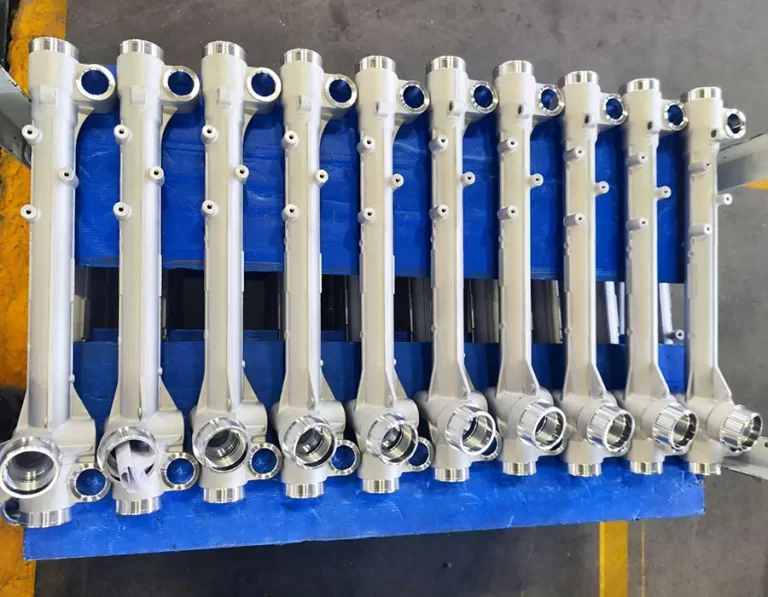

The aluminum alloy doors and windows, phone cases, soda cans, and even airplane wings we encounter daily all appear to be “aluminum,” yet they are diverse in type and purpose.
Among them, “wrought aluminum” stands as the “all-rounder” of the aluminum family, permeating every facet of industrial production and daily life.
Many confuse “deformed aluminum” with ordinary aluminum materials.
Today, we’ll clarify once and for all: What exactly is deformed aluminum? And what common aluminum materials surround us?
In simple terms, wrought aluminum (wrought aluminum alloys) refers to aluminum alloys processed through various plastic deformation techniques to form sheets, bars, profiles, or forgings.
Known in English as wrought aluminum alloys, their core characteristics are “formability and high strength,” distinguishing them from cast aluminum formed directly through pouring.
Its “birth process” resembles “forging iron into tools”:
First, aluminum ingots are melted and cast into billets.
After homogenization treatment, they undergo repeated processing through rolling, extrusion, drawing, and forging.
This ultimately transforms them into various shapes we need—such as thin sheets rolled for beverage cans, extruded profiles for doors and windows, or forgings for aircraft components.
Having covered this, let’s introduce the three core advantages of wrought aluminum to our readers:
Lightweight:
With a density roughly one-third that of steel, it reduces product weight while maintaining structural strength, making it a “weight-saving marvel” in aerospace and automotive industries.
Ease of Processing: Its exceptional plasticity allows complex shapes to be formed through multiple deformation techniques.
It can also undergo heat treatments like annealing or quenching to flexibly adjust properties as needed.
Multiple Advantages:
It offers excellent electrical and thermal conductivity, strong corrosion resistance, and certain grades can even achieve strength comparable to steel after strengthening treatments, making it suitable for diverse complex applications.
Here’s a key distinction:
The core difference between wrought aluminum and cast aluminum lies in their “forming methods.”
Cast aluminum uses “liquid forming” (similar to pouring cement, where molten aluminum is poured into molds and cooled to shape), making it suitable for complex parts with lower strength requirements (e.g., engine blocks).
Wrought aluminum undergoes “solid-state forming,” making it suitable for structural components requiring high strength and ductility (e.g., aircraft wings, automotive bodies).
The deformable aluminum family is extensive and can be broadly categorized into two types based on whether they can be strengthened through heat treatment:
Softer in texture and corrosion-resistant, commonly used in daily life.
This type of deformable aluminum primarily relies on methods like solution strengthening and cold working to enhance strength.
Its core advantages are excellent plasticity and strong corrosion resistance, though it has relatively lower strength.
It is suitable for products that do not require high strength but demand easy machinability and corrosion resistance.
Common types include:
Aluminum-manganese alloys: Representative examples include LF21 (Chinese designation), which offers exceptional corrosion resistance and plasticity.
Commonly used for beverage cans, cookware, and roofing panels, many of the cans we drink from are made from this type of aluminum.
Aluminum-magnesium alloys:
These offer higher strength than aluminum-manganese alloys, exceeding 300 MPa, with strong corrosion resistance.
They are particularly suitable for marine environments and widely used in welded structures like dump truck bodies, oil storage tanks, small vessel hulls, and certain architectural components.
This category primarily achieves strength through precipitation hardening (age hardening), yielding significantly higher strength than the previous type.
Certain grades are suitable for high-end industrial applications. Common types include:
Aluminum-Copper/Aluminum-Copper-Magnesium Alloys (Hard Aluminum):
Designated as LY, with LY12 (corresponding to the international 2024 alloy) as a typical example. Tensile strength reaches 470–480 MPa.
High strength makes it a staple in aerospace, used for aircraft fuselages, wings, and other structural components, with some applications in high-strength mechanical parts.
Aluminum-Magnesium-Silicon Alloys:
The most commonly used medium-strength alloys are designated as LD. A typical example is LD1 (corresponding to the international 6063 alloy).
They offer excellent weldability and corrosion resistance, and are easily surface-treated (e.g., anodized).
They are the “mainstay” of architectural profiles, indispensable for doors, windows, curtain walls, and furniture.
Aluminum-Zinc-Magnesium-Copper Alloy (Super-Hard Aluminum):
Designated as LC, with the representative alloy LC9 (corresponding to the international 7075 alloy).
It boasts an extremely high tensile strength of 540–570 MPa, primarily used in aerospace and military applications such as aircraft landing gear and high-strength structural components.
Beyond wrought aluminum, numerous common aluminum materials surround us in diverse forms and applications.
After researching online resources, we’ve compiled four of the most frequently encountered aluminum alloys for your reference. Keep reading to learn more.
The most basic form of aluminum is soft yet highly versatile.
High purity (typically over 99%), excellent electrical and thermal conductivity, but low strength.
Highly malleable, primarily used for manufacturing wires, cables, insulation materials, and the aluminum foil we commonly use (food packaging, kitchen foil).
Some pure aluminum is also used in simple daily necessities.
Capable of complex shapes, offering high cost-effectiveness.
The “liquid-formed” aluminum mentioned earlier contains higher silicon content (7%–25%), offering excellent fluidity that allows easy fabrication into intricate shapes.
Examples include automotive engine blocks, transmission housings, wheel hub blanks, and small mechanical components.
Its low cost and rapid forming process make it the “cost-effective choice” in industrial applications.
The go-to choice for doors, windows, and curtain walls—a must-have.
Most belong to the aluminum-magnesium-silicon series (6063 alloy) within wrought aluminum, formed through extrusion into diverse cross-sectional shapes (flat, channel, round tubes, etc.).
They are widely used in architectural doors, windows, curtain walls, railings, industrial equipment supports and frames, and even decorative components for furniture and appliances.
The aluminum alloy doors and windows commonly found in our homes are the most typical example of aluminum extrusions.
Found in every household, with diverse applications.
Aluminum plates are rolled from wrought aluminum, with different thicknesses serving distinct purposes:
thin plates for automotive bodies and building roofs, thick plates for pressure vessels.
Aluminum foil is an ultra-thin cold-rolled aluminum product offering excellent sealing and corrosion resistance.
Beyond food packaging, it’s used in pharmaceutical packaging and electronic shielding materials—such as foil wrappers for pills and internal shielding foil in mobile phones.
Wrought aluminum is not a “single aluminum material” but a collective term for “aluminum alloys suitable for plastic deformation processing.”
With its high strength, lightweight properties, and ease of machining, it underpins multiple industries, including aerospace, construction, and automotive.
Meanwhile, pure aluminum, cast aluminum, and aluminum extrusions each play distinct roles in various applications around us.
Wrought aluminum is not a single material but a broad category of aluminum alloys specifically designed for plastic deformation processing.
Through rolling, extrusion, forging, and heat treatment, it achieves an excellent balance of lightweight characteristics, strength, corrosion resistance, and workability.
These advantages make it indispensable in aerospace, automotive manufacturing, construction, and countless other industries.
At the same time, pure aluminum, cast aluminum, aluminum extrusions, and aluminum sheets each serve distinct and complementary functions in modern society.
From structural aircraft components made of high-strength 7075 alloys to everyday beverage cans formed from aluminum-manganese alloys, aluminum materials quietly support modern life in diverse and essential ways.
Understanding these differences not only clarifies common misconceptions but also reveals how material science shapes the products we rely on every day.
Introduction Aluminum alloys are foundational materials in modern engineering, prized…
Table of Contents Usually contains more than 12% chromium or…
Laser cladding technology enhances the hardness, wear resistance, and corrosion…